Showing posts with label Research. Show all posts

Friday, 21 March 2014

Types of shots & Camera angles


Extreme Long Shot
This type of shot is usually used to set the scene of a film this can also be called an establishing shot. It can be taken from as much as quarter of a mile away. This shot is often used to give a general impression of the scene rather then a detailed view. This is normally used to show a place rather than a person.


 Long Shot
This is to show a life size image of the action it's normally taken from about 6ft. This shows the audience what action is happening from a normal height. It can be taken of a place but can also be taken showing a character from a full length so we can see the whole character. E.g. A person wearing a police outfit would automatically give off connotations of a police officer.
                                                      

Extreme Close up
This is just basically an extreme version of a close up. This often focus' on a subjects face or an object or car etc.. This often is used to dramatise the film and is a unnaturalistic shot, there is also no background shown in the frame of this shot.
       
                                                     Close up
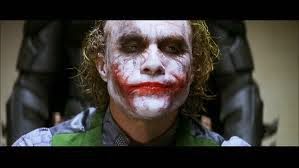
This shot often shows little of the background and the background is even blurred sometimes to create focus on the main propose of the shot. This often concentrates on the face or some object that is key to the mes on scene in clip. This often is used to show a characters facial expressions to show the mes on scene of the clip.


Medium Shot
This normally shows the subject in the frame from the waist upward this is often used for dialogue clips to show the subject clearly. It is also used to concentrate on a subject head and shoulders to the characters emotions. 
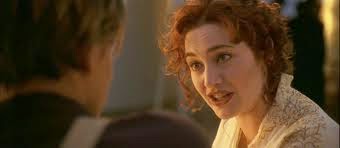
Over The Shoulder Shot
This is taken over the shoulder of a character to show another character this is often used in the dialogue and is often used with the camera movement of shot reverse shot showing a the conversation of two characters. It is a good clear way to show the audience a conversation.
Camera Angles
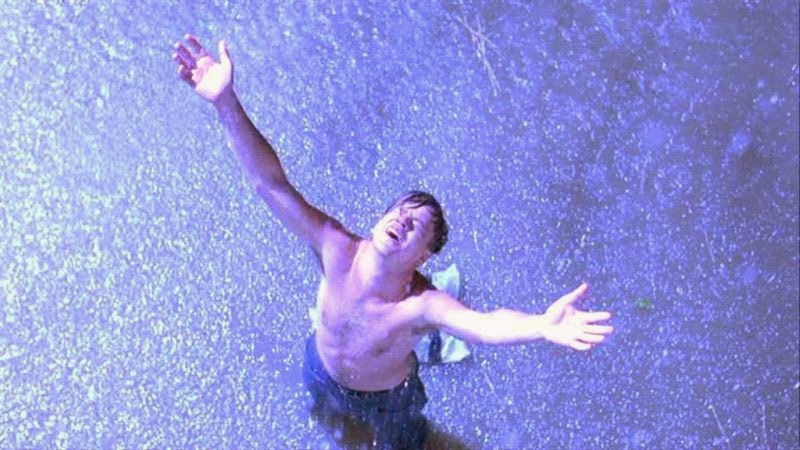
Birds Eye View Shot
This is a unrealistic shot, this is a shot taken from directly above this gives a heavenly view of the clip when it is used.
High Angle
High angles have been taken from above the subject to make objects look smaller and less powerful. This makes the audience feel more powerful over the character in the clip.
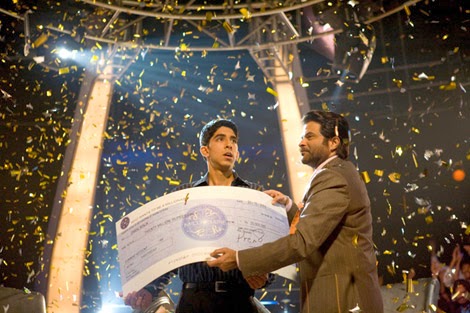


Low Angle
This increases height and often gives characters or objects more power, this gives the viewer as sence of innocence and insecurity to the subject.
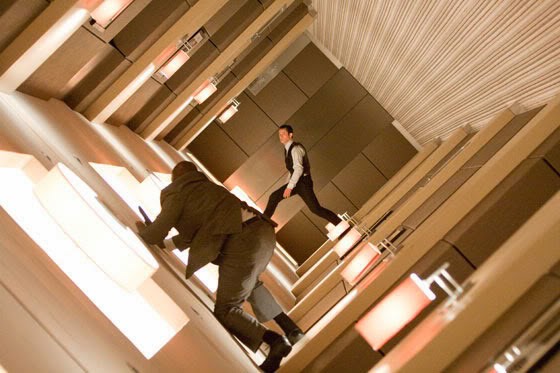
                                                     
 Canted Angle
This angle is taken on a obscure angle to give the sense of unease. It can also give a imbalance to the mes en scene in the clip, this is a popular angle in horror films.

Thursday, 20 March 2014

Themes Of Psychological Thriller

Psychological thrillers have become very popular over the past few years, all in various different media platforms. Despite different storyline and different representations general themes of the genre have appeared of representation, general trends have appeared. These themes include:


  • Reality
  • Perception
  • Mind
  • Existence/Purpose
  • Identity
  • Death


In psychological thrillers the character normally has mental health problems because of something that has happened in the past or just due to a mental health problem. The main character normally has a center around death they may be threatened with death, be forced to deal with death or fake their own deaths. There is may sub genres within a physiological thriller it can often be linked to crime drama e.g. Dexter.

Continuity

The continuity is very important in filming this means the characters costume, props etc must stay the same through out filming otherwise the film you are making becomes not believable and also confusing for the audience. When filming we are going to make sure on the days we have planned we will use the same costumes and props to make sure the continuity is perfect. As shown below this would be called a continuity error.

The Rule Of Thirds

The rule of thirds is a guideline which applies to the process of filming or taking photographs. The guideline proposes that an image should be divided into nine equal parts by two horizontal and three vertical lines, that are equally spaced. We use this technique to make the photograph have points of tension, energy and interest by making the photograph align with these nine boxes.
We will use this in our film making to make our film look professional by having the grid up on the camera when filming. This will not only make our filming look more interesting but also will make the picture look more even.

180 Degree Rule


                When making our film we must remember the 180 degree rule it's a basic guideline for the on screen spacial relationship between two characters or objects within a scene. Their is an imaginary line called the axis this makes sure the camera is on one side of the axis for every shot in the scene, otherwise when watching the clip back it will appear to be the wrong way around like the two characters have swapped places.
So when filming our opening two minutes we must remember the 180 degree rule is obeyed. The camera passing over the axis is called jumping the lineor line.


Titles

This lesson we have been thinking about the titles we are going to use on our opening two minute clip. We are going to use a simple font and the colour white to not distract the audience as they are watching our film. I have researched some of the titles the film The Lovely Bones has used and we are going use similar titles to theirs.

  • The titles used to show the actors names will be over a moving image so the film is still carrying on while the titles are on screen as shown above.

  • Then the title of our film will be shown on its own on a plain black backing to show make the audience focused on the title of our film. As shown below.

Saturday, 15 March 2014

How we are going to apply our research


We are going to include the brightness of the lovely bones the way it is edited makes it stand out and makes the film more interesting. When we edit our films clips we will use the colour scale and saturation to make the colour more vivid like the film. We can also make the flashbacks we are putting in our opening two minutes look even more vivid so they almost look dreamlike to show they are a flashback.

Thursday, 30 January 2014

Flims we have researched


The Lovely Bones
A 14-year-old girl in suburban 1970's Pennsylvania is murdered by her neighbour. She tells the story from the place between Heaven and Earth, showing the lives of the people around her and how they have changed all while attempting to get someone to find her lost body.
Director:

 Peter Jackson


Writers:

 Fran Walsh (screenplay), Philippa Boyens (screenplay).


Stars:

 Rachel Weisz, Mark Wahlberg, Saoirse Ronan.


Hide And Seek

After the sudden  suicide of his wife, David Callaway takes his traumatised daughter, Emily, away to to start their life again in a new home. Emily fails to settle in well, with David becoming concerned as Emily identifies with Charlie and imaginary friend. Someone who David has never met before, but who likes to play Hide and Seek.
Director:

 John Polson


Writer:

 Ari Schlossberg
Stars:

 Robert De Niro, Dakota Fanning, Famke Janssen.


We studied these two films for our research because we thought they had good story lines and also fitted out genre; physiological thriller. I also really like the colour used on the lovely bones because it was really vivid and bright so I would like to use this when we film the first part of our two minute opening of our flashback of the two little girls in the park. To show equilibrium and then the next part will be darker and less vivid colour to show contrast to the first part. I also think it would be good then we edit the first bit edit more of the colour red into it to show slight danger.

Monday, 16 December 2013

Film Age Restrictions

What does the 15 symbol mean?

No-one under 15 is allowed to see a 15 film at the cinema or buy/rent a ‘15’ rated DVD. 15 rated works are not suitable for children under 15 years of age.

Are there any limits on what sort of theme a work can have at 15?

There are no theames that cant be used but needs apropriate for 15 year olds.

Is 15 really stronger than 12A?

Yes. 15 works are stronger than 12 or 12A rated works and could include any of the following:
  • strong violence
  • frequent strong language (eg 'f***').
  • portrayals of sexual activity
  • strong verbal references to sex
  • sexual nudity
  • brief scenes of sexual violence or verbal references to sexual violence
  • discriminatory language or behaviour
  • drug taking

How much strong language is there in a 15?

At 15 there is no limit on the number of uses of strong language (eg f***).
Occasionally there may be uses of the strongest terms (eg 'c***'), although continued use will not normally be passed 15.

What about discriminatory or offensive terms?

There may be racist, homophobic or other discriminatory language, and the work could explore themes relating to this.
However, at 15 the work as a whole must not endorse discriminatory language or behaviour.

How much sex and nudity is allowed at 15?

At 15 sexual activity can be portrayed, as long as there is no strong detail. Some sex scenes can be quite long on a 15 rated film and may include some nudity and movement. Though nudity may be allowed in a sexual context there should be no strong detail.
There are no constraints on nudity in a non-sexual or educational context.
There can be strong references to sex and sexual behaviour, but especially strong or crude references are unlikely to be acceptable unless justified by context.
Heterosexual and homosexual sex and sex references are treated the same.

Can there be strong violence?

Yes, at 15 violence might be strong. It should not focus on the infliction of pain or injury, however, and the strongest gory images are unlikely to be acceptable.
Strong sadistic or sexualised violence is also unlikely to be acceptable.
Easily accessible weapons may not be glamorised.

What about sexual violence?

There may be detailed verbal references to sexual violence (for example descriptions of rape or sexual assault in a courtroom scene or in victim testimony) but any portrayal of sexual violence must be discreet and have a strong contextual justification.

What about horror works?

Many horror films are rated 15. At 15 there can be strong threat and menace (as long as it is not sadistic or sexualised), although the strongest gory images are unlikely to be acceptable.

Can you see drugs in a 15 rated film or video?

At 15 drug taking may be shown but the work as a whole must not promote or encourage drug misuse.
The misuse of easily accessible and highly dangerous substances like aerosols or solvents is unlikely to be acceptable at 15.

What about dangerous behaviour or things teens might copy?

The BBFC consider the risk of potential harm to impressionable teenagers. For example, dangerous behaviour such as hanging, suicide and self-harming should not dwell on detail which could be copied.

All information was taken from the bbfc website.
http://www.bbfc.co.uk/

Psychological Thriller

Psychological Thriller

Psychological thriller is a fictional thriller story which emphasizes the psychology of its characters and their unstable emotional states. In terms of classification, the category is a sub-genre of the broader ranging thriller category, with similarities to Gothic and detective fiction in the sense of sometimes having a "dissolving sense of reality", moral ambiguity, and complex and tortured relationships between obsessive and pathological characters. Psychological thrillers often incorporate elements of mystery, drama, and horror, particularly psychological horror. They are usually books or films. Peter Hutchings states that varied films have been labelled psychological thrillers, but that it usually refers to "narratives with domesticated settings in which action is suppressed and where thrills are provided instead via investigations of the psychologies of the principle characters." A distinguishing characteristic of a psychological thriller is a marked emphasis on the mental states of its characters: their perceptions, thoughts, distortions, and general struggle to grasp reality. According to director John Madden, psychological thrillers focus on story, character development, choice, and moral conflict; fear and anxiety drive the psychological tension in unpredictable ways. Madden stated that their lack of spectacle and strong emphasis on character have caused them to decline in popularity in Hollywood. Psychological thrillers are suspenseful by exploiting uncertainty over characters' motives, honesty, and how they see the world. Films can also cause discomfort in audiences by privileging them with information that they wish to share with the characters; guilty characters may suffer similar distress by virtue of their knowledge. James N. Frey instead defines psychological thrillers as a style, rather than a sub-genre; Frey states that good thrillers focus on the psychology of their antagonists and build suspense slowly through ambiguity. Distinguishing psychological thrillers from horror films can be difficult; marketing is used to differentiate the genres, though fans may reclaim films in contravention to the original marketing. Creators who seek to distance themselves from the negative connotations of horror may categorize their work as a psychological thriller. The same situation can occur when critics label a work to be a psychological thriller in order to elevate its perceived literary value.